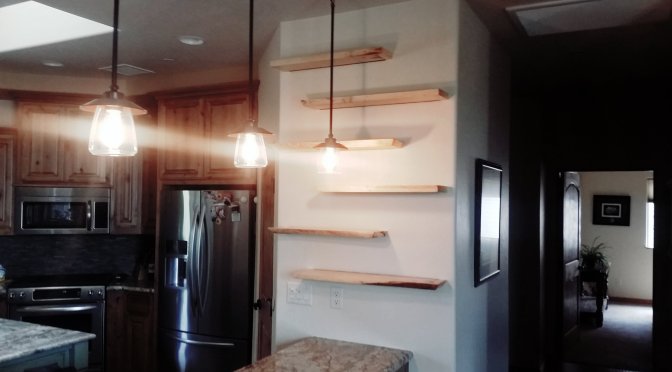
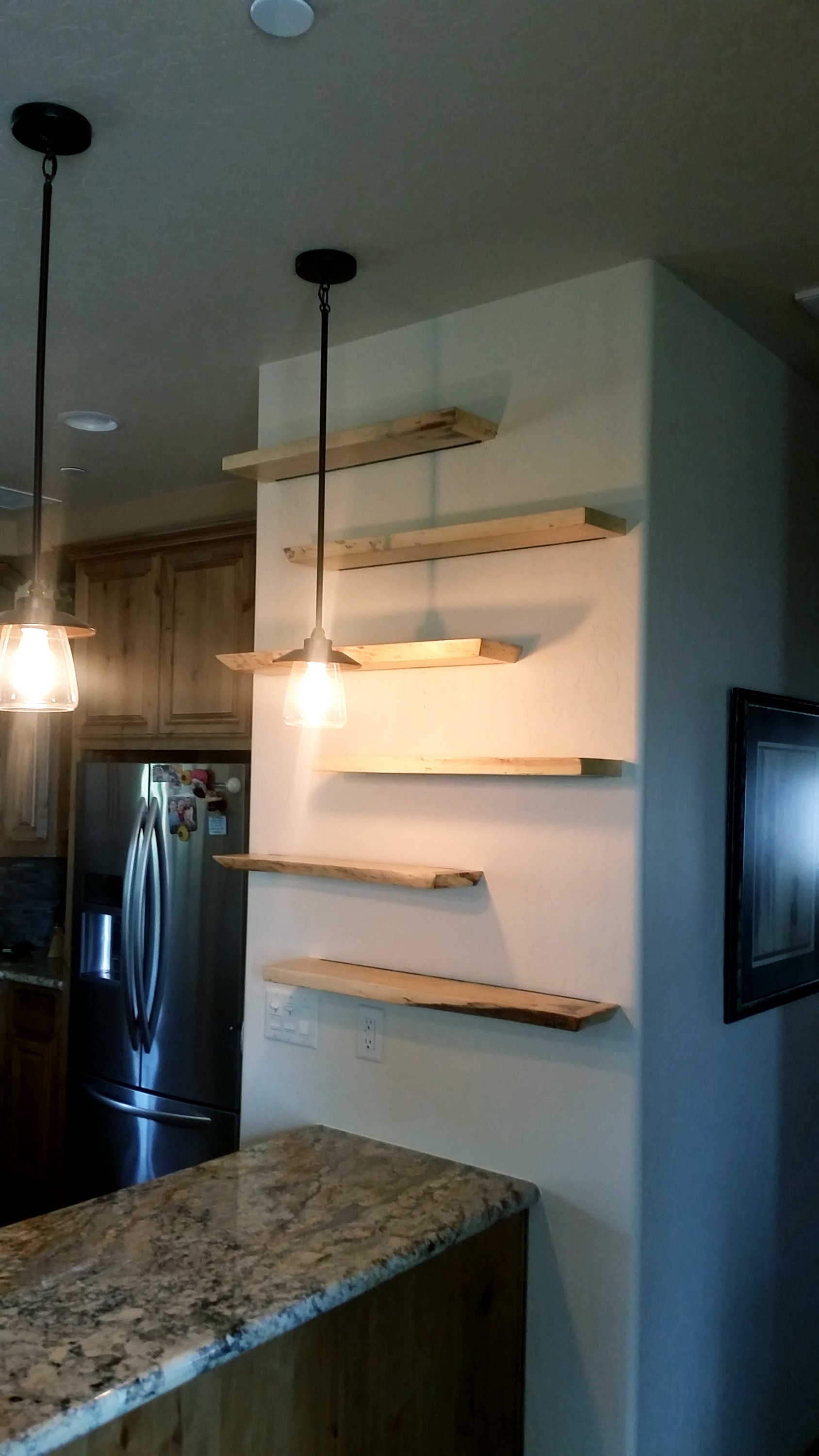
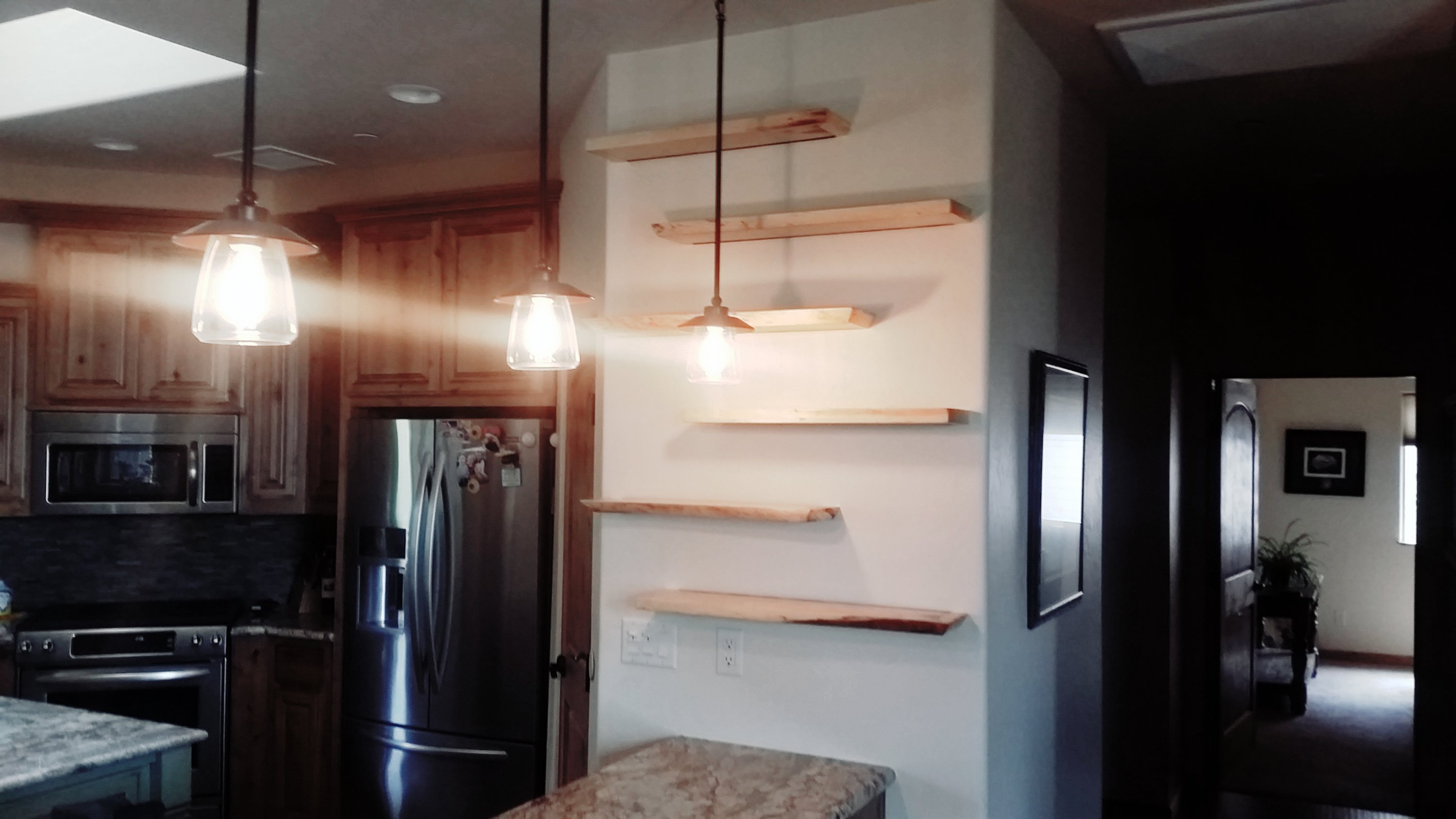
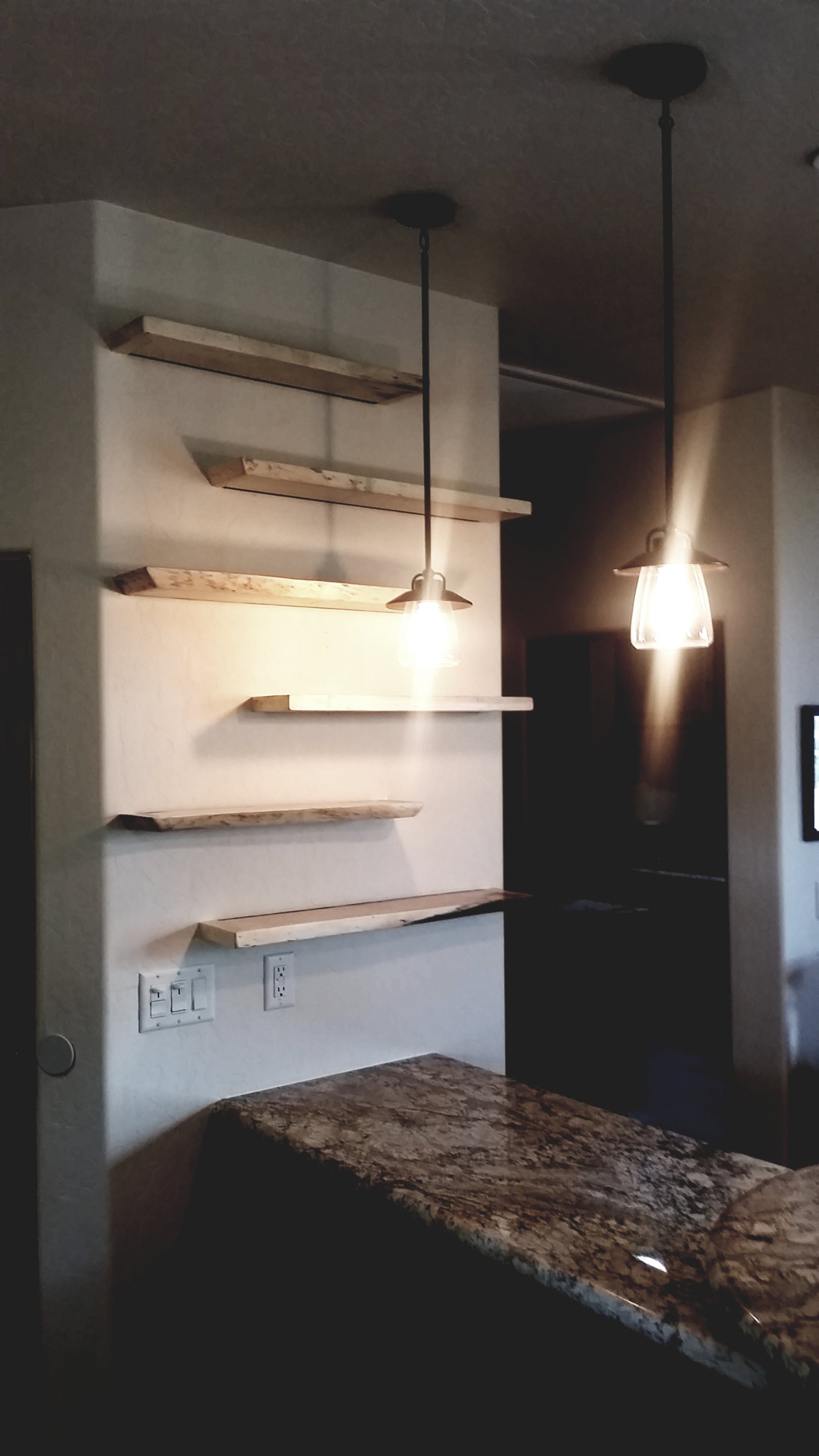
Last summer before leaving Prescott I created these simple floating slab shelves using native live-edge Ponderosa Pine to create a space at the kitchen island for displaying glasses. The modern rustic sensibility of the natural wood complements the upscale western lodge accents of this custom home in the Hassayampa neighborhood.
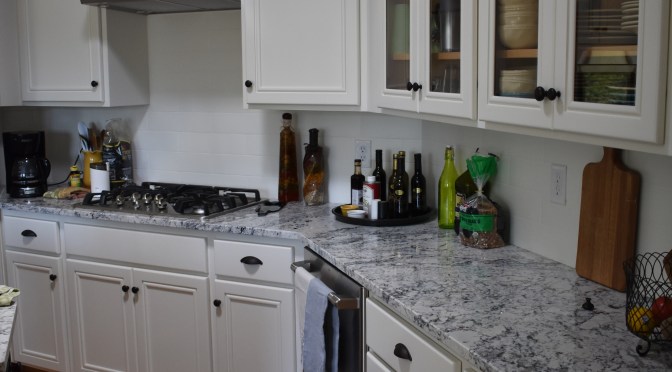
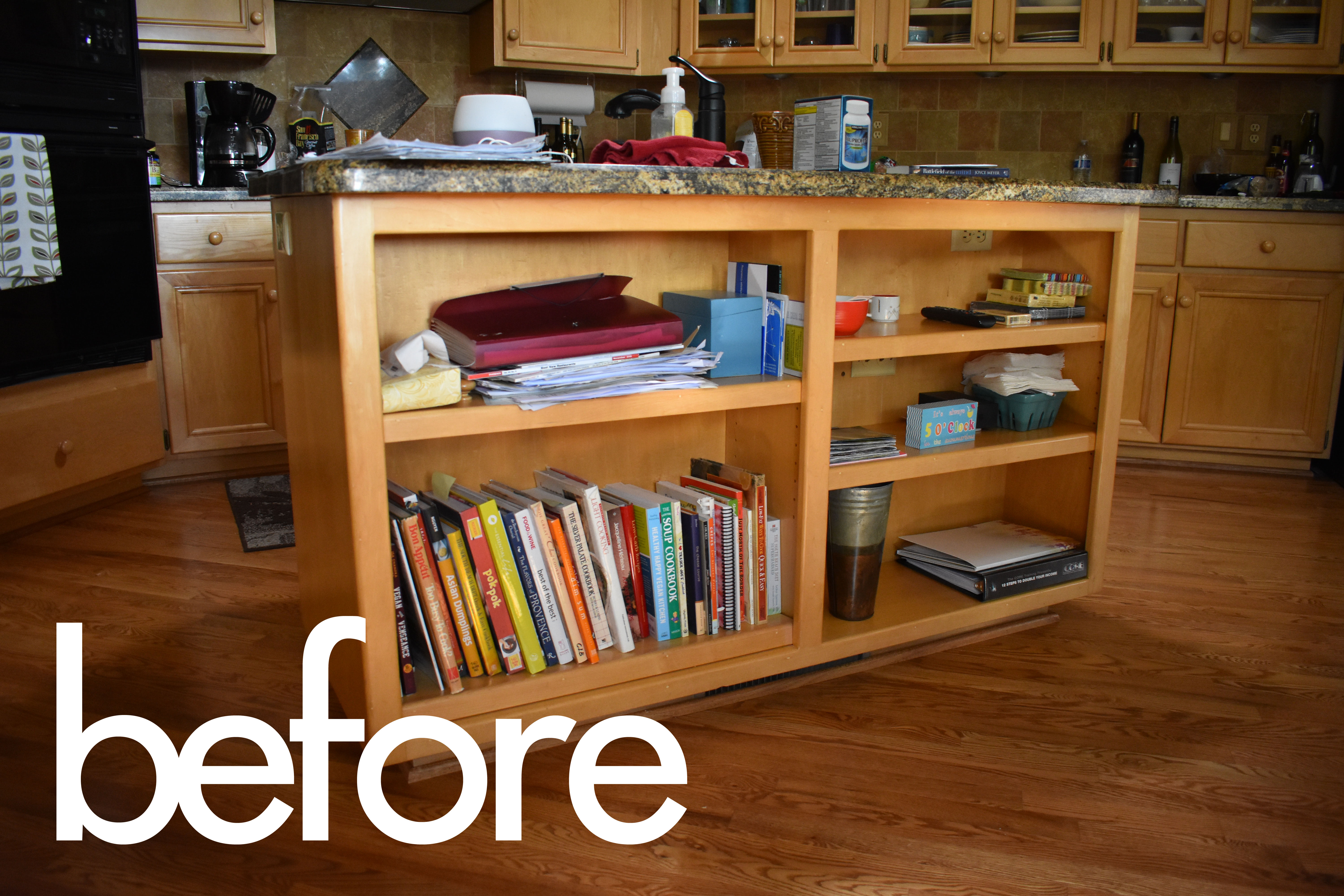
I was brought in by interior designer Shelley Moran to perform some custom renovation work to update a home built in the 90s. Shelley had a vision for the kitchen that involved a major makeover, from common yet transformative moves like painting cabinets, getting new appliances, and replacing countertops, to functional decisions like converting the bookshelf side of an island into a bar. Shelley knew the reputation of Anastasis for quality craftsmanship and problem-solving.
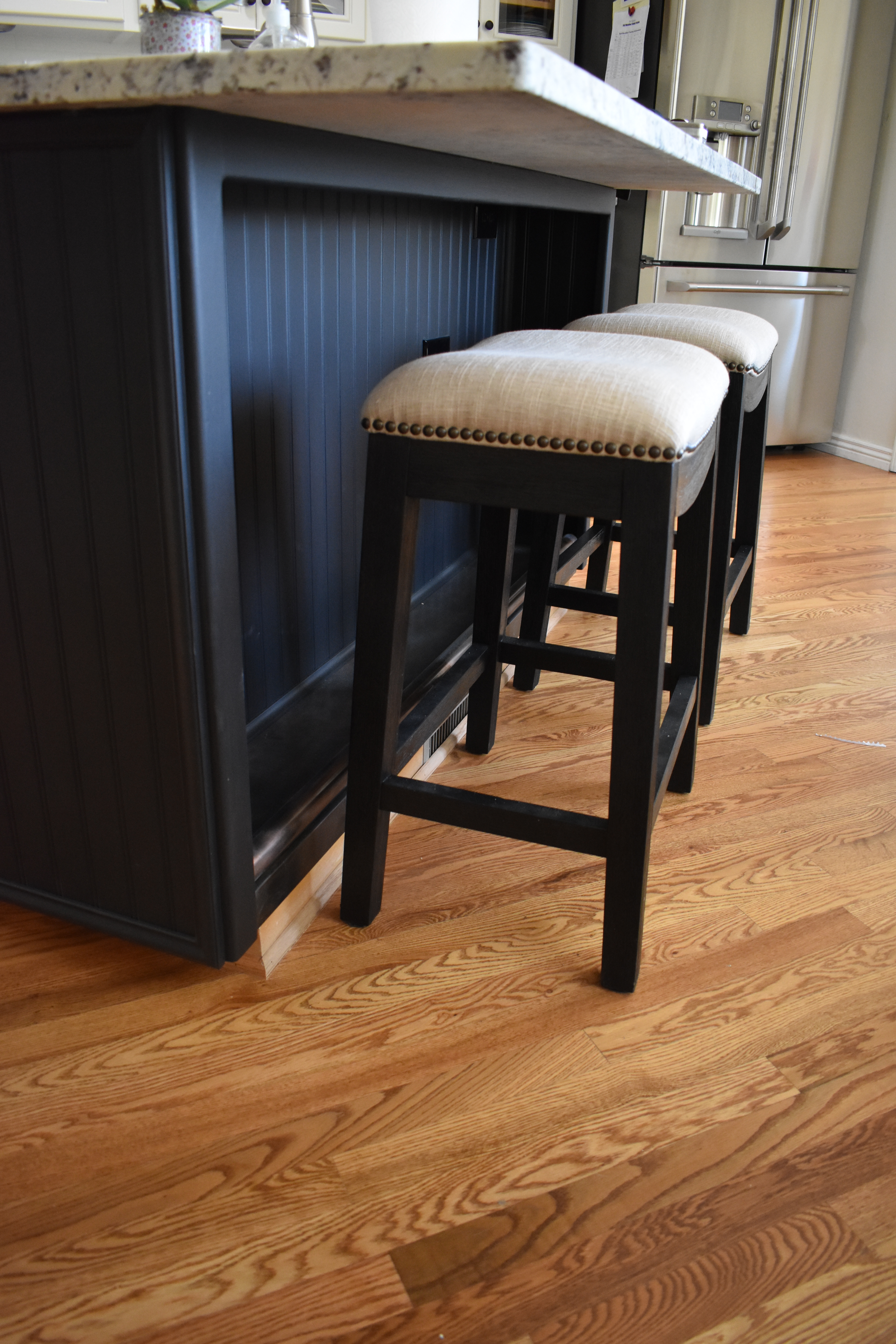
Here, beadboard and a steel footrail complete the transformation.
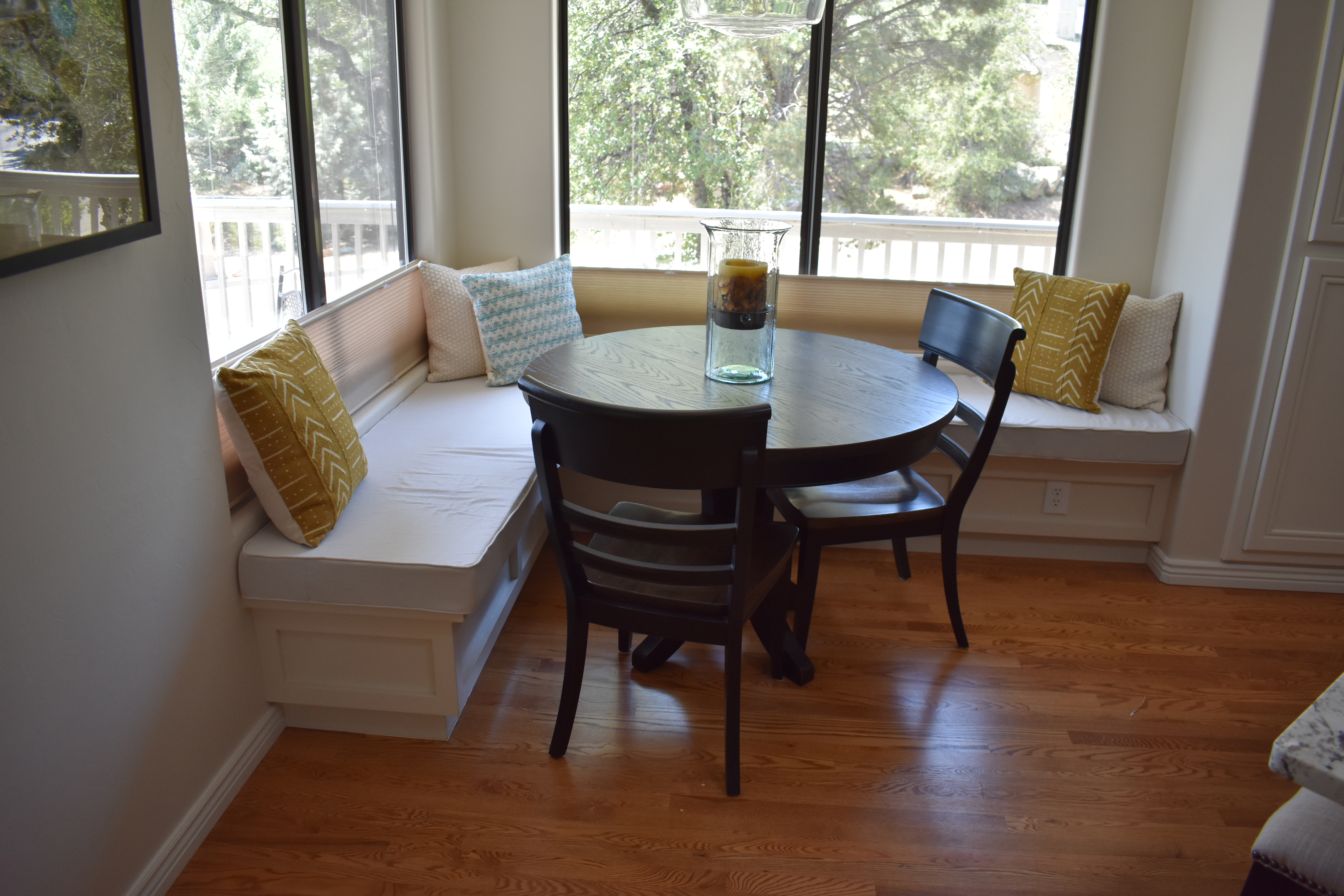
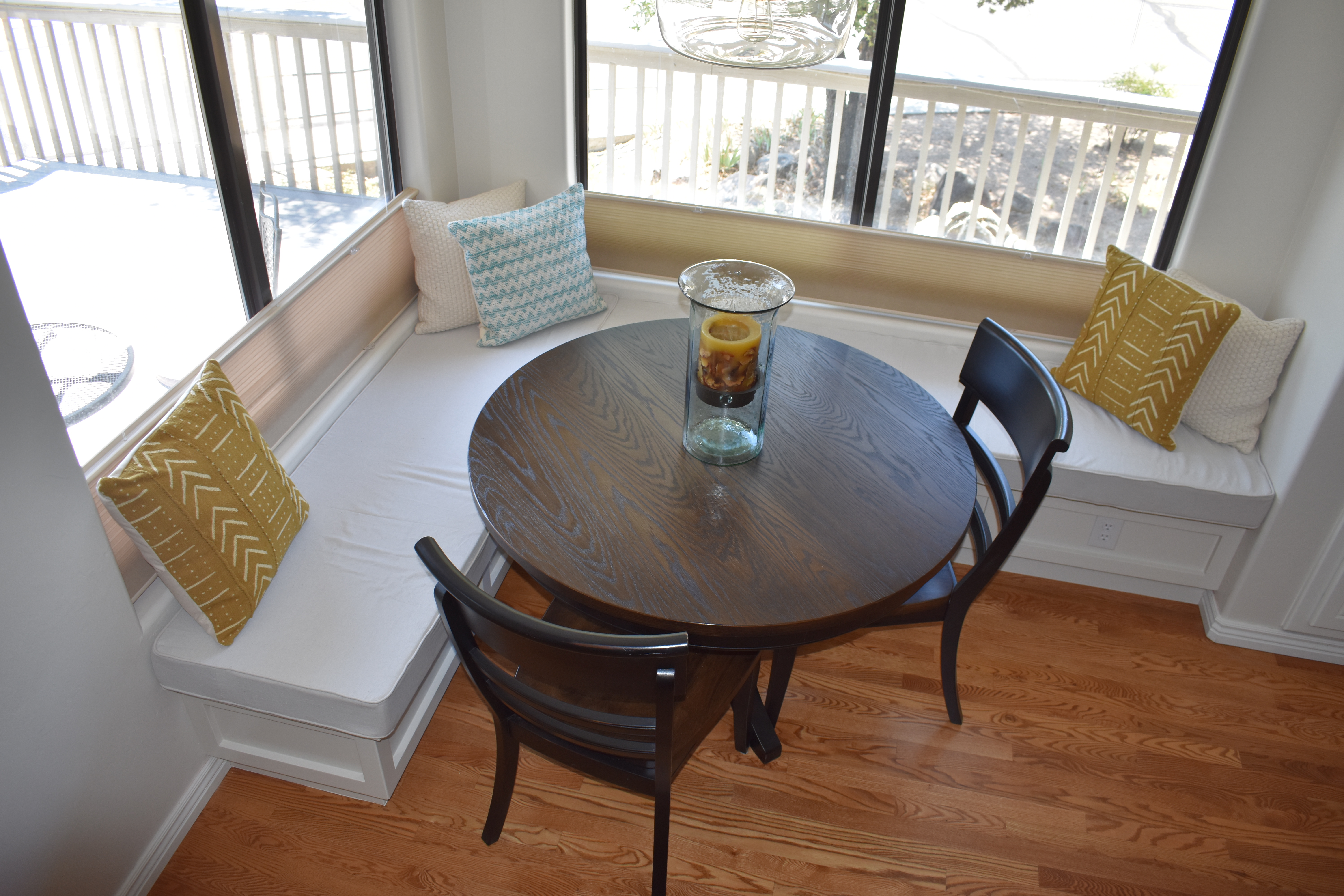
Another aspect of the kitchen re-do was to create a built-in banquette seating area in an L-configuration for a breakfast nook.
We brought outlets and HVAC forward so they would not be covered by the new banquette.
Finally, I was able to convert all the cabinet doors over from a surface-mount hinge to a hidden, euro-style hinge, and install all new pull hardware. The result is a beautiful, modern farmhouse-style kitchen that used existing elements rather than throw out all the old and bring in new cabinetry.
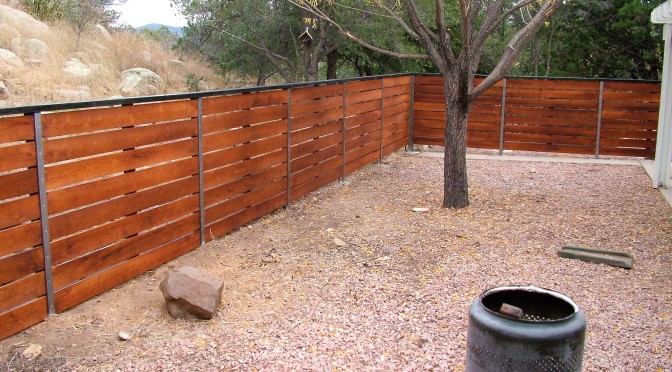
In November 2016, I designed and constructed this modern backyard fence with two gates for the safety of young kids. Inexpensive woods and stain create a high-end design look for less money.
Five years ago, in 2012, with the first stage of the Prescott Donut Factory under my belt (before The Warehouse expansion) I had another restaurant project come along that really shaped the way I work and gave Anastasis a lot of needed visibility. That project was Biga, a very small local eatery that quickly garnered a strong following and good buzz about town – for good reason. Original owners Annie and Kristen developed a delicious and morphing seasonal menu which was an eclectic combination of fresh/local and perfectly executed “comfort foods” from around the country.
I came up with a wall-cladding system to hide the existing drywall (without removing it) by using rib lath and veneer stone mortar, to give the impression of something like poured concrete walls, columns, and beams.
But it was my job to design and build out the dining room and bar on a shoestring budget. To be honest, I did this project more for the visibility and portfolio-building potential (and the creative freedom to pretty much have carte-blanche, floor to ceiling) than profitability. I was barely started with the business and undervalued my services severely in those days.
The bench seating alcove at the blue wall allows for multiple small tables to be pulled together to form a continuous table for larger parties.
So what we were able to pull off for the money was still a major achievement in my book (I was working with a friend at the time.) Biga remains open and popular today under new ownership.
Entry door.
The idea was to take the existing tiny restaurant – an Italian joint whose interior sported a mess of faux-painted walls, trellis, plastic grapes, and other “Tuscan” cliches – and transform it into an urban industrial vibe, as if you had entered an underground machine-shop-turned-hip-drinking-establishment in a major city. Prescott is not a major urban center, and we just don’t have the long-established history of built environment here like you find on the East Coast. So we had to create that blend of “gritty” and fresh new intervention all from scratch.
“Before”
“Before”
“Before”
“Before”
This project was never highlighted on this site, so five years later, it’s about time to bring out these old photographs from just before it was first opened. It was an exciting time, and I’m grateful to the original owners for giving me the opportunity and trusting me to re-create the old restaurant into the unique and exciting space that Biga is known for.
Check out the full gallery below with captions that describe the design elements:
A cast-in-place concrete bar was formed with rough-sawn boards, topped with a steel-and-glass bartop and illuminated with LEDs.
This iconic blue wall defined the space, sloping slightly to serve as the back of the long bench. “Always-on” fluorescent tubes wash the wall in light, so that whether open or closed, the restaurant would always have a glow of life.
A full bar for a tiny restaurant gives patrons a broad range of drink options.
The “blue wall” had a custom paint color mixed – I call it “electric safety blue”
These mechanical steel sun shades were designed to be raised or lowered to break the powerful sun which pours through these windows in the evenings during certain times of the year.
This “butcher-block” style bench was glued up using the same stock of cedar as the form boards for the concrete bar wall.
I came up with a wall-cladding system to hide the existing drywall (without removing it) by using rib lath and veneer stone mortar, to give the impression of something like poured concrete walls, columns, and beams.
Lighting above the bar.
Colored LEDs and “farm lights” illuminate bottles and white subway tile of the back bar.
The bench seating alcove at the blue wall allows for multiple small tables to be pulled together to form a continuous table for larger parties.
The restroom hallway, with lots of heavy, rusty steel.
Industrial “safety” colors continue.
Heavy timbers “bookend” the two sides of the bar.
I love the end grain of these timbers – actually guardrail posts.
Footlighting at the bar gives the sense of the heavy concrete floating.
We made the flooring, too, making planks from thin plywood and using a mix of four different stain colors.
I made this coffee table in the waiting area, as well as all the other table tops from steel and OSB.
The back bar cabinets are laboratory cabinets. They worked great in the space.
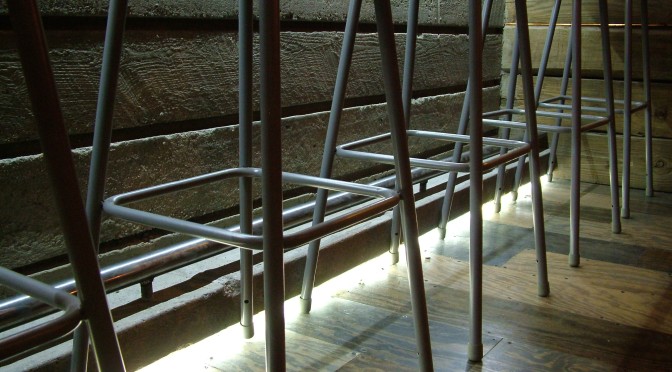
Glass and steel bar. Lab stools. I also designed the menu stands (there are no paper menus, just a folded piece of paper clipped to a sheetmetal stand for each table.)
Legacy plant from the old restaurant.
Heavy steel bar shelf and subway tile.
Back bar. Gotta have some diamond plate.
Mortar and steel cladding on the column, and exposed-conduit lighting with “explosion-proof” fixtures.
Steel decking used in the bay window ceiling.
I even made this planter for the window with a found object “dingbat.”
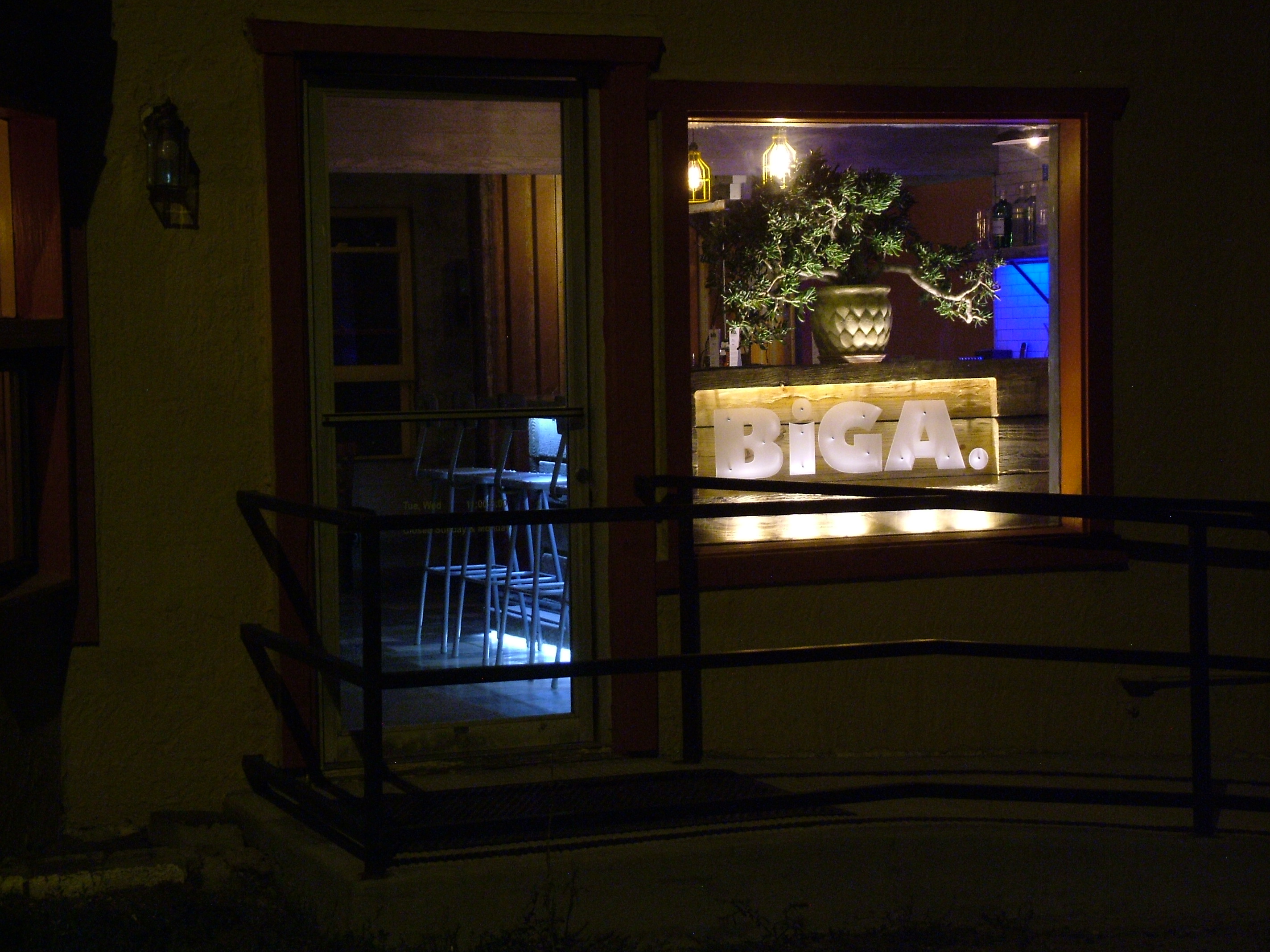
I designed the bar-end to be an illuminated acrylic sign for the window.
View from the outside. A blah exterior hides an impressive interior.
Entry door.
I had these letters laser-cut from frosted acrylic.
Festoon lights are affixed to the underside of the roof with small D-rings. Photo: T. Bouras
Photo: T. Bouras
Photo: T. Bouras
Photo: T. Bouras
Photo: T. Bouras
“Before” A very low and leaky roof.
“Before”
I replaced the vinyl siding on this wall with reclaimed cedar boards.
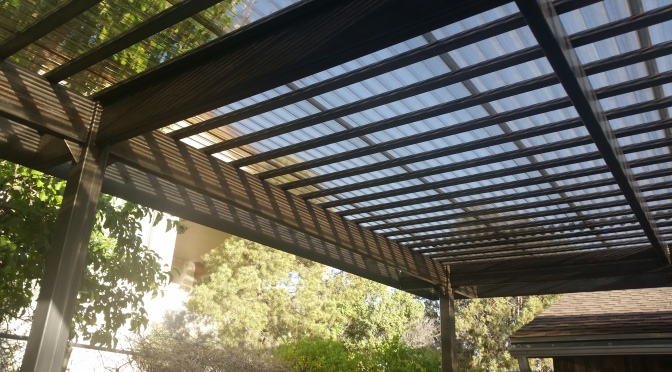
The homeowner selected smoked Lexan roof panels to provide shade while still admitting lots of daylight, and most importantly, keeping the rain away. These Tuftex panels are strong and durable.
I replaced an aging wooden patio cover with corrugated fiberglass panels – low and leaky – with a tall freestanding steel shade pergola, topped with smoked Lexan panels to shed rain. This functional modern intervention will in time join the other metal panels in the garden in taking on a rusted finish.
I also installed a gutter and rain catchment barrel, and replaced vinyl siding with reclaimed cedar. Finally, I created a steel gate from a punchout panel to replace a worn-out chain-link gate.
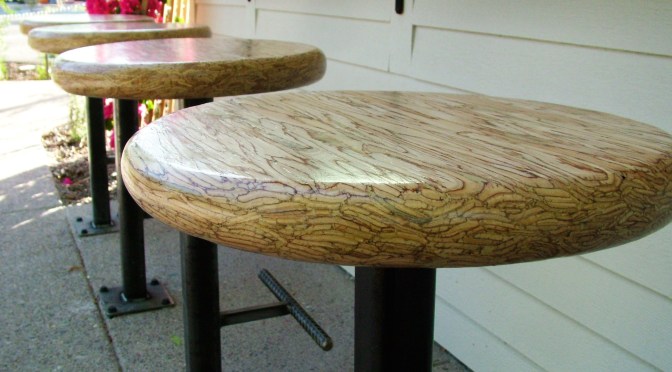
I created a set of 27 bolt-down stools for The Orchard in Phoenix – short ones for outdoors and inside at low counters, and tall ones for use at a bar-height counter. The tops are made of Parallam – an engineered structural wood product by Weyerhaeuser which is typically used for long-span beams. Parallam is made from the waste strands of wood from the mill, and is a very strong product. It is not without its challenges, though. It takes a lot of work to get it suitable for furniture or other “presentable” applications. Like polishing a gem, eventually the beauty emerges. I had seen some amazing turnings that wood artists had made from Parallam, such as bowls – I knew its potential, but it’s not a quick process.
I was challenged to build a table that could seat 12 people at once or break apart for seating pairs at six separate sub-tables. This plywood and steel 6-foot square table now resides in the upstairs room at The Barley Hound, Prescott’s gastropub.
This white wall will be a periodically-changing canvas for different invited artists.
The assembled banquet table seats three to a side.
Clean modern sensibility meets funky old bones (including stained glass) of this historic home on Cortez Street in downtown Prescott, Arizona.
The table with one section removed. The square of tubular steel in the tabletop more than just aesthetic; it is a linkage circuit of sockets and drawbars to hold the assembled table together.
One stand-alone table for two – or more.
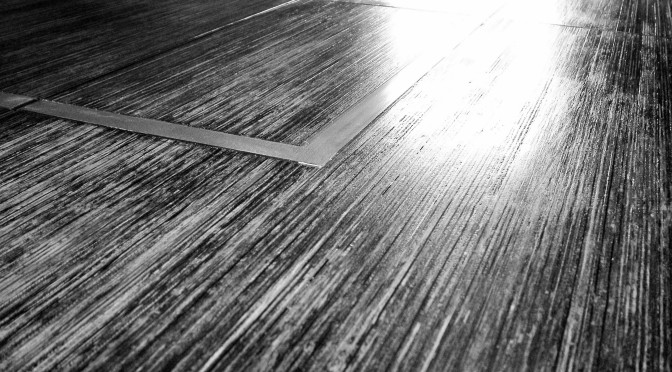
Beautiful distressed (semi-restored) wood floor in this very old house-turned-restaurant.
Offset L-shaped legs mimic the fragmented parts of the steel square in the subtables.




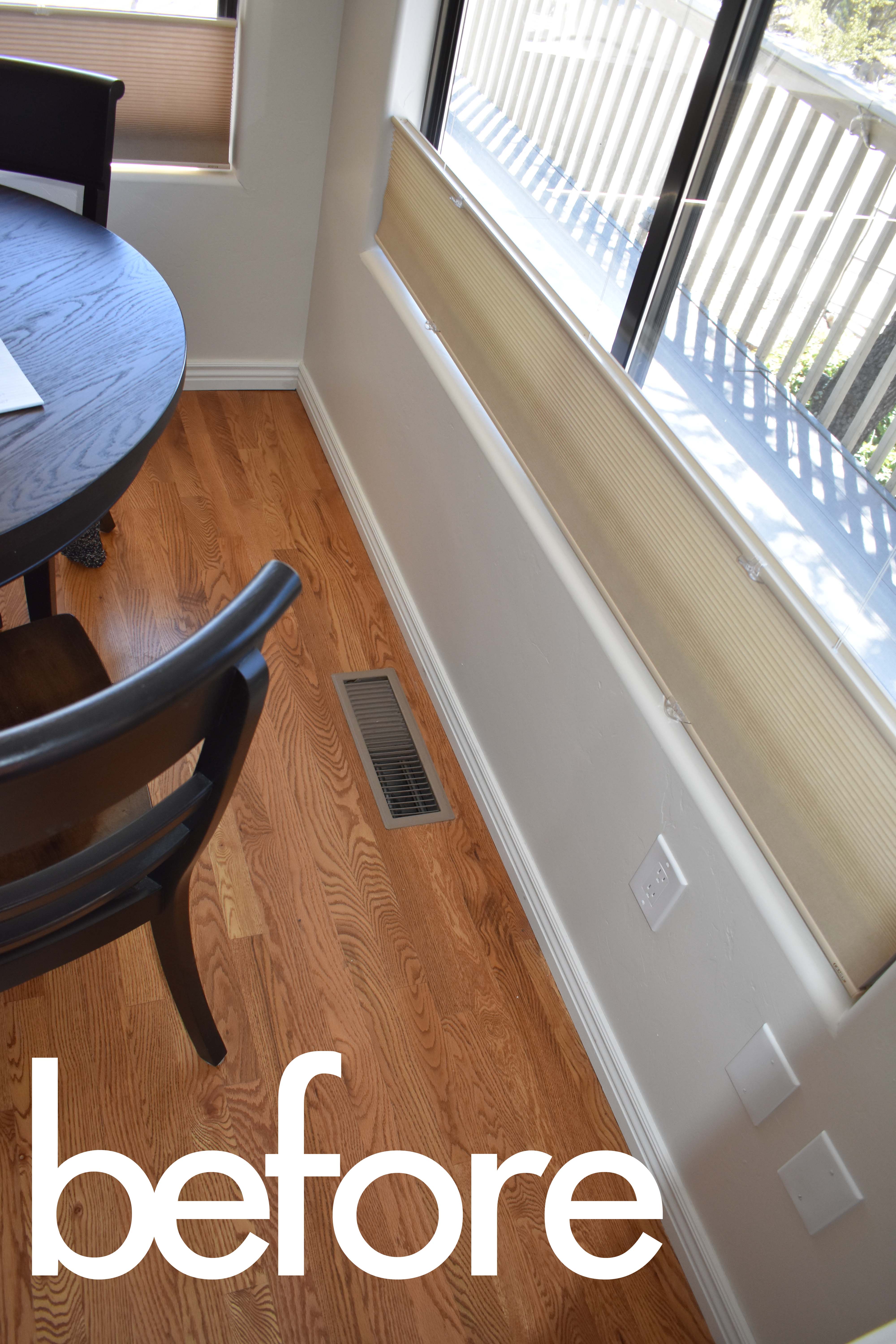
 We brought outlets and HVAC forward so they would not be covered by the new banquette.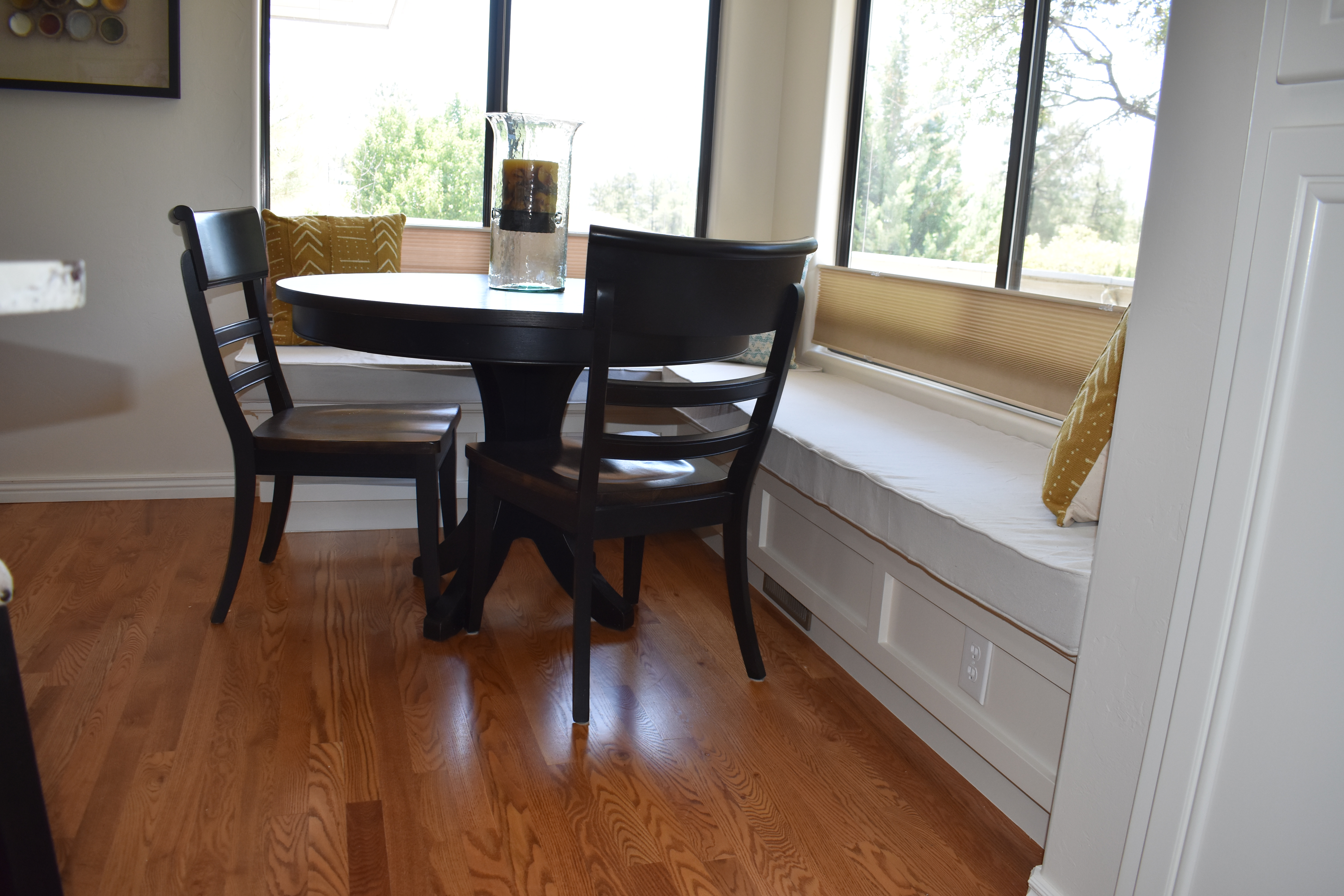














 anastasis