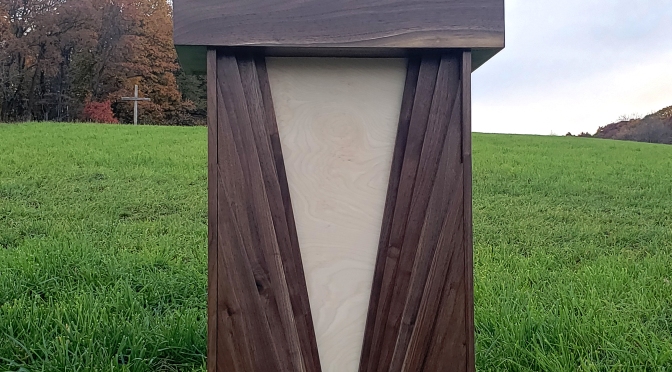
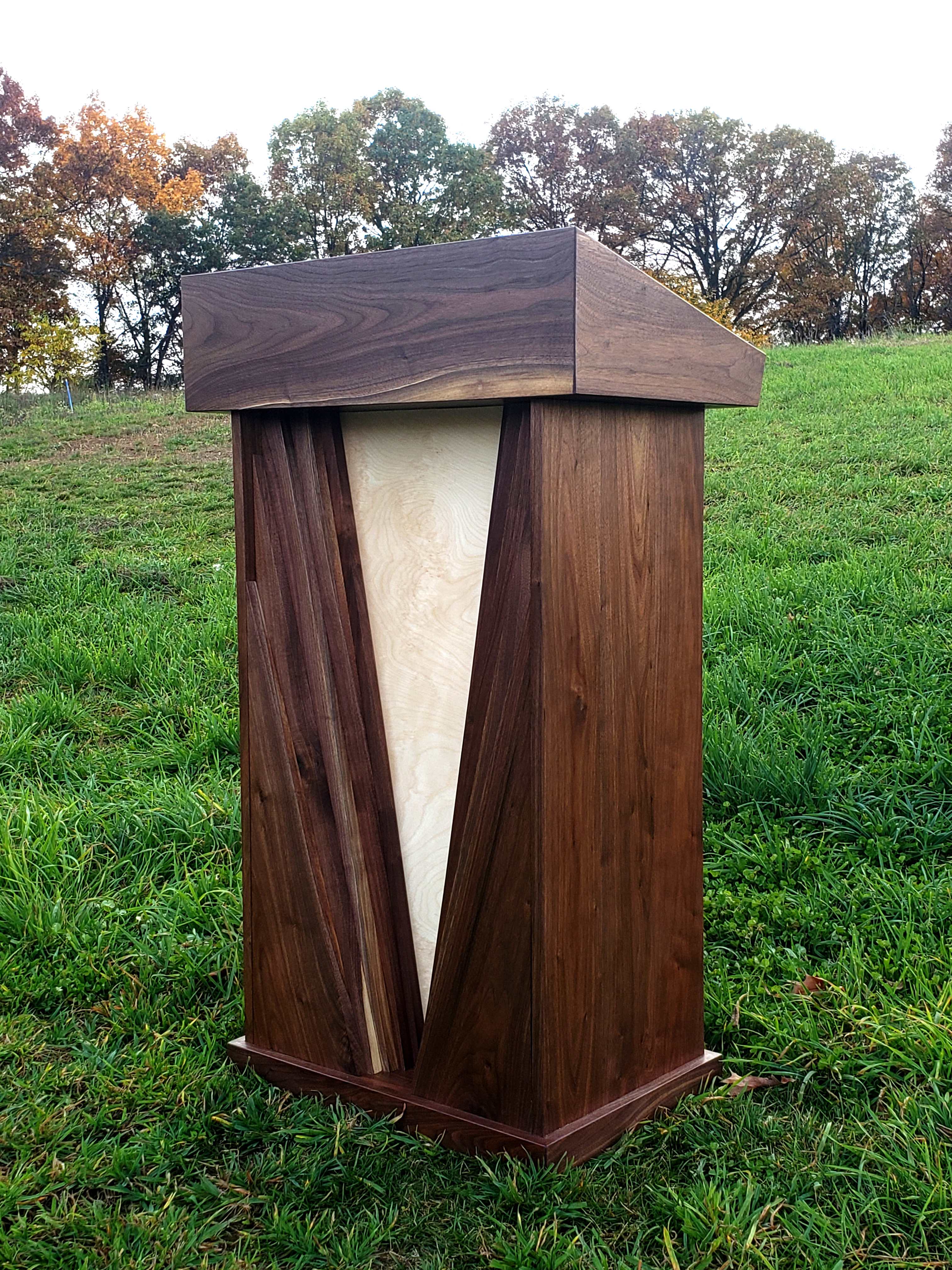
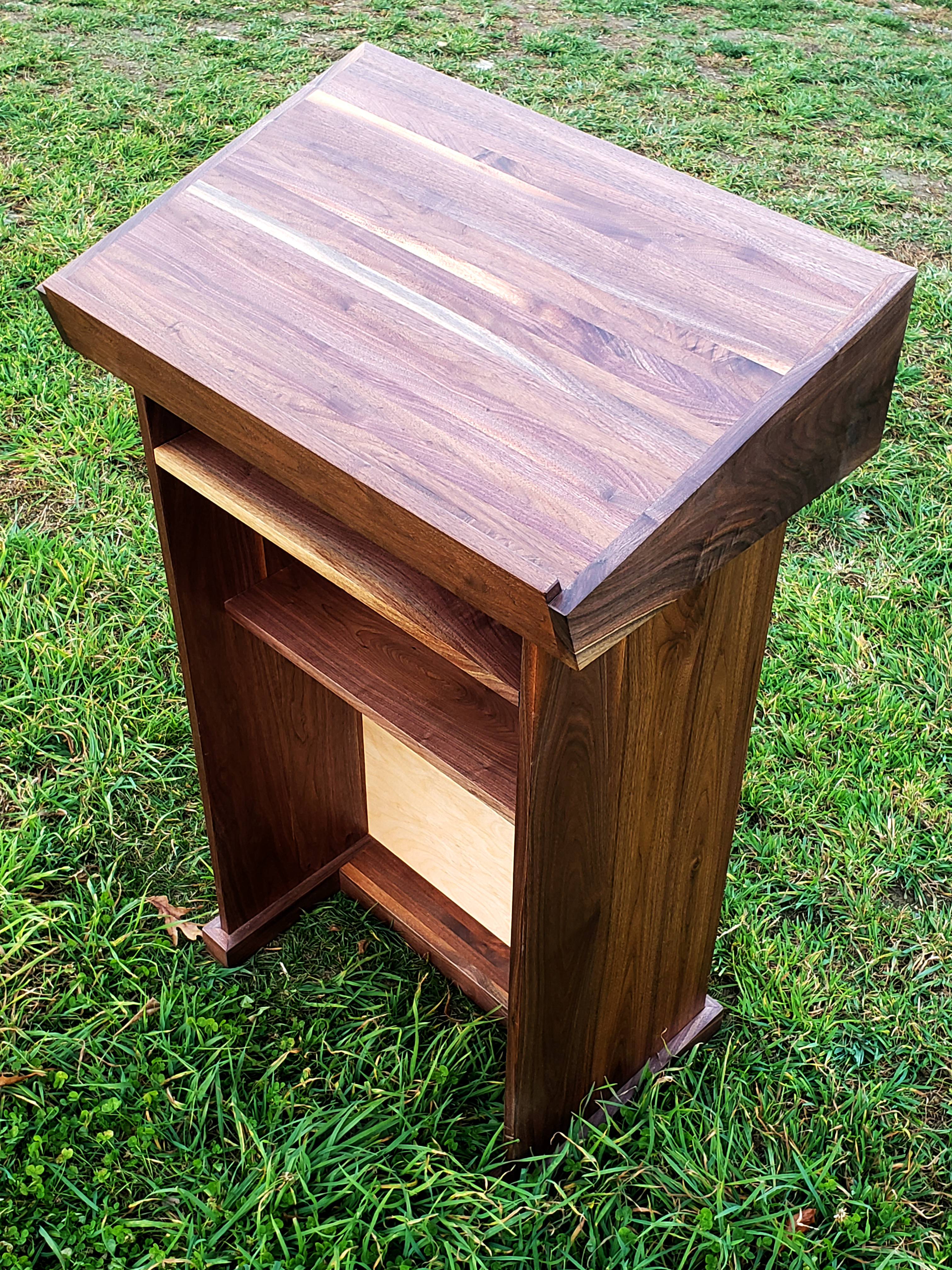
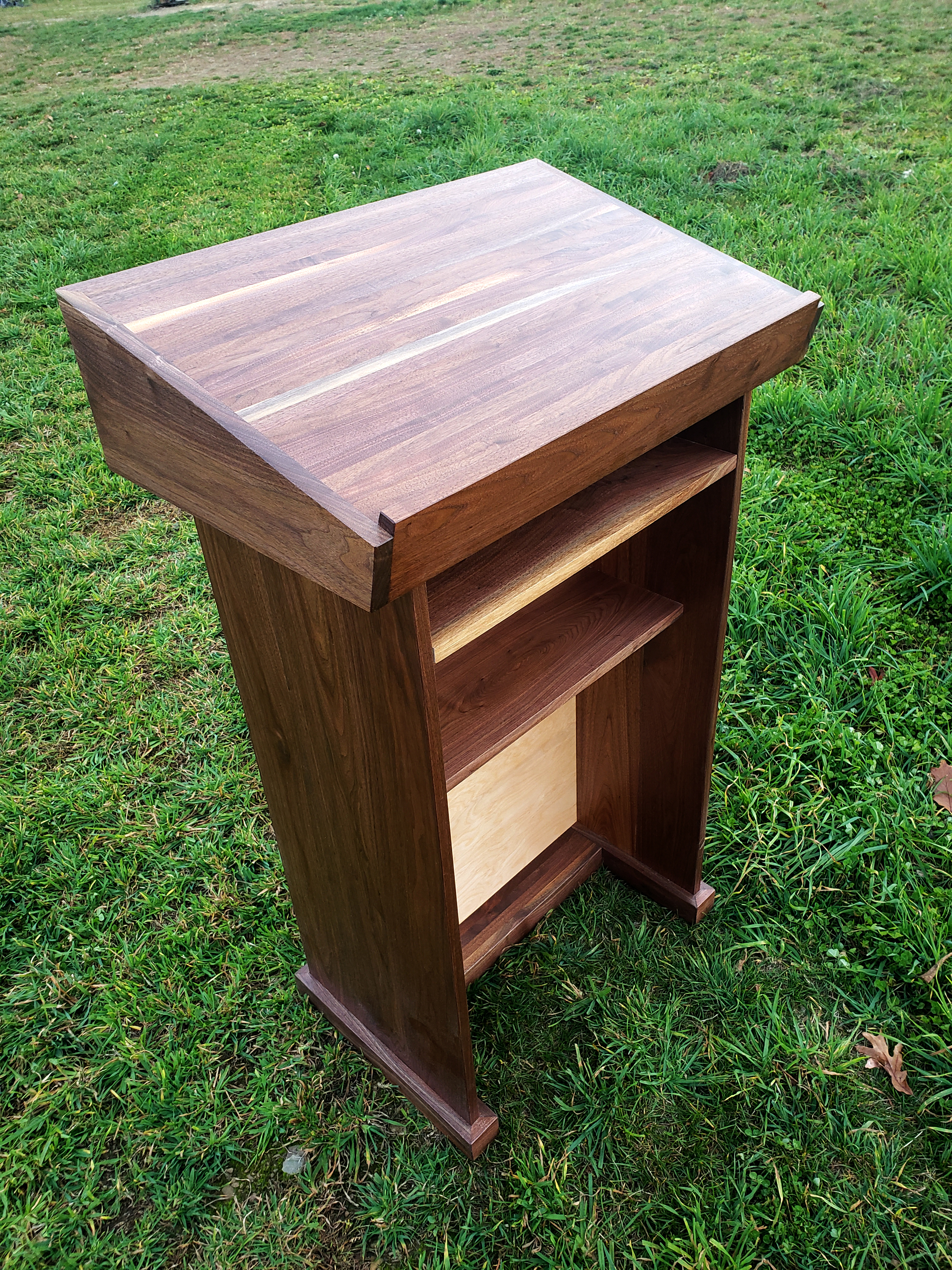
I had the opportunity to craft a custom pulpit for a friend’s church. Using a contrasting dark wood – natural black walnut – against a maple plywood interior, my idea was to evoke the imagery of the temple veil being torn at the death of Christ on the cross. The layers of solid walnut on the front face of the pulpit are “pulled back” to reveal a bright interior “light.”
This “unveiling” (the Greek loan word in English would be “apocalypse”) of the Holy of Holies referenced in Matthew 27.51, et. al., signified both the grief of the the Father rending His garment (note that the Scriptures say it was torn from top to bottom, like a man tearing his shirt in mourning and impossible to have done from the floor of the room), but more importantly, that access to the throne of God could now be enjoyed by all His children. The veil was torn open to reveal the glory of the new covenant access to God Himself. Shrouds of darkness opened to luminous grace. Post Tenebras Lux.
As the writer of Hebrews says, “Therefore let us draw near with confidence to the throne of grace, so that we may receive mercy and find grace to help in time of need.” (Heb 4.16, NASB) The death and subsequent resurrection of Christ spelled the beginning of the end of the system of priest, temple, and sacrifice, since the final perfect Sacrifice had been made, and Jesus, our great High Priest, lives forever to intercede for us (Heb 7.25). The destruction of the last man-made Temple was made complete in AD 70.
There may be other imagery that could be associated with the design – the parting of the Red Sea, for instance; walking through a valley; heaven coming down to earth; opening of a Bible; or the historical “black robe” of the preacher.
I pray that this pulpit is a place where the Gospel and all its implications are faithfully proclaimed for decades to come to feed the sheep of the Good Shepherd – all of Christ, for all of life. S.D.G.
Five years ago, in 2012, with the first stage of the Prescott Donut Factory under my belt (before The Warehouse expansion) I had another restaurant project come along that really shaped the way I work and gave Anastasis a lot of needed visibility. That project was Biga, a very small local eatery that quickly garnered a strong following and good buzz about town – for good reason. Original owners Annie and Kristen developed a delicious and morphing seasonal menu which was an eclectic combination of fresh/local and perfectly executed “comfort foods” from around the country.
I came up with a wall-cladding system to hide the existing drywall (without removing it) by using rib lath and veneer stone mortar, to give the impression of something like poured concrete walls, columns, and beams.
But it was my job to design and build out the dining room and bar on a shoestring budget. To be honest, I did this project more for the visibility and portfolio-building potential (and the creative freedom to pretty much have carte-blanche, floor to ceiling) than profitability. I was barely started with the business and undervalued my services severely in those days.
The bench seating alcove at the blue wall allows for multiple small tables to be pulled together to form a continuous table for larger parties.
So what we were able to pull off for the money was still a major achievement in my book (I was working with a friend at the time.) Biga remains open and popular today under new ownership.
Entry door.
The idea was to take the existing tiny restaurant – an Italian joint whose interior sported a mess of faux-painted walls, trellis, plastic grapes, and other “Tuscan” cliches – and transform it into an urban industrial vibe, as if you had entered an underground machine-shop-turned-hip-drinking-establishment in a major city. Prescott is not a major urban center, and we just don’t have the long-established history of built environment here like you find on the East Coast. So we had to create that blend of “gritty” and fresh new intervention all from scratch.
“Before”
“Before”
“Before”
“Before”
This project was never highlighted on this site, so five years later, it’s about time to bring out these old photographs from just before it was first opened. It was an exciting time, and I’m grateful to the original owners for giving me the opportunity and trusting me to re-create the old restaurant into the unique and exciting space that Biga is known for.
Check out the full gallery below with captions that describe the design elements:
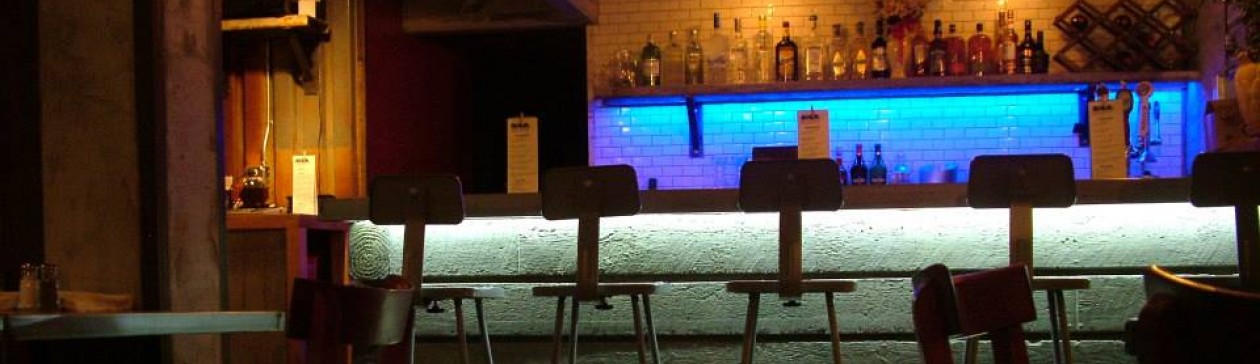
A cast-in-place concrete bar was formed with rough-sawn boards, topped with a steel-and-glass bartop and illuminated with LEDs.
This iconic blue wall defined the space, sloping slightly to serve as the back of the long bench. “Always-on” fluorescent tubes wash the wall in light, so that whether open or closed, the restaurant would always have a glow of life.
A full bar for a tiny restaurant gives patrons a broad range of drink options.
The “blue wall” had a custom paint color mixed – I call it “electric safety blue”
These mechanical steel sun shades were designed to be raised or lowered to break the powerful sun which pours through these windows in the evenings during certain times of the year.
This “butcher-block” style bench was glued up using the same stock of cedar as the form boards for the concrete bar wall.
I came up with a wall-cladding system to hide the existing drywall (without removing it) by using rib lath and veneer stone mortar, to give the impression of something like poured concrete walls, columns, and beams.
Lighting above the bar.
Colored LEDs and “farm lights” illuminate bottles and white subway tile of the back bar.
The bench seating alcove at the blue wall allows for multiple small tables to be pulled together to form a continuous table for larger parties.
The restroom hallway, with lots of heavy, rusty steel.
Industrial “safety” colors continue.
Heavy timbers “bookend” the two sides of the bar.
I love the end grain of these timbers – actually guardrail posts.
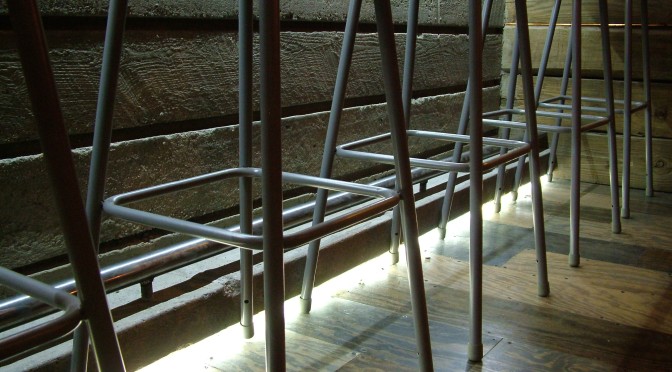
Footlighting at the bar gives the sense of the heavy concrete floating.
We made the flooring, too, making planks from thin plywood and using a mix of four different stain colors.
I made this coffee table in the waiting area, as well as all the other table tops from steel and OSB.
The back bar cabinets are laboratory cabinets. They worked great in the space.
Glass and steel bar. Lab stools. I also designed the menu stands (there are no paper menus, just a folded piece of paper clipped to a sheetmetal stand for each table.)
Legacy plant from the old restaurant.
Heavy steel bar shelf and subway tile.
Back bar. Gotta have some diamond plate.
Mortar and steel cladding on the column, and exposed-conduit lighting with “explosion-proof” fixtures.
Steel decking used in the bay window ceiling.
I even made this planter for the window with a found object “dingbat.”
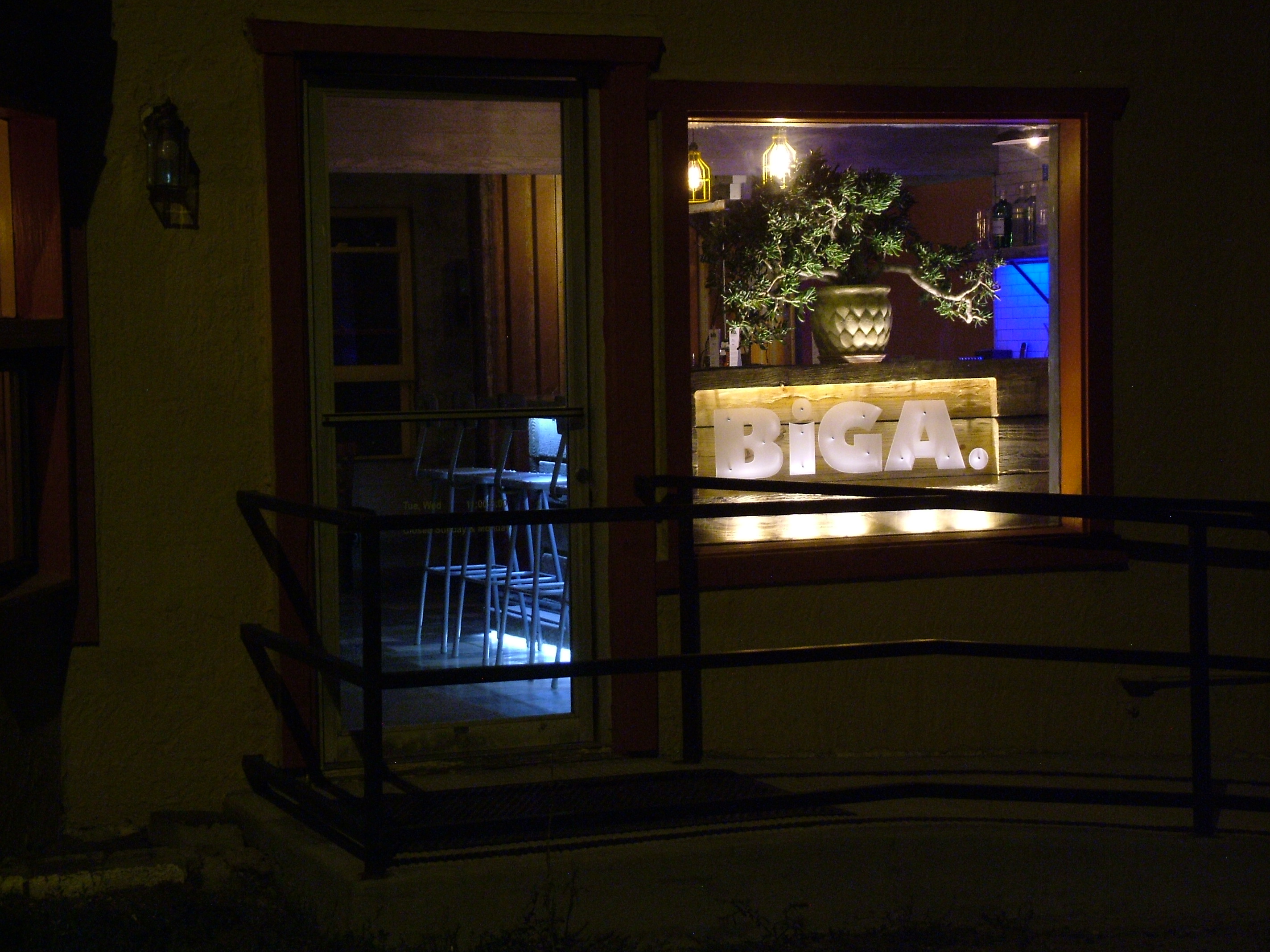
I designed the bar-end to be an illuminated acrylic sign for the window.
View from the outside. A blah exterior hides an impressive interior.
Entry door.
I had these letters laser-cut from frosted acrylic.
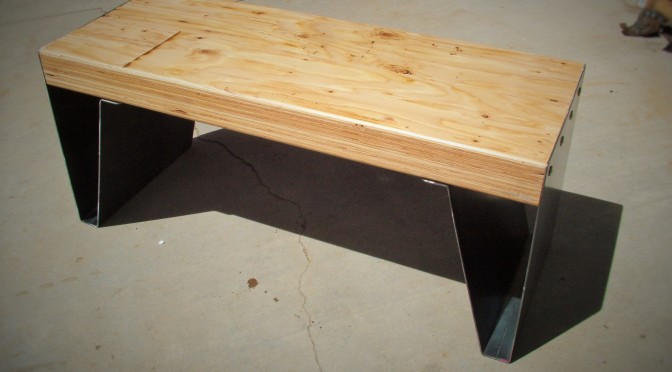
This sturdy modern bench was crafted for a local leather-goods shop (think trying on shoes). The seat is an engineered beam known as Microllam or Laminated Veneer Lumber (LVL). The legs are bent 10-ga steel, inspired by the midcentury classic hairpin legs, but in a more “extruded” mode.
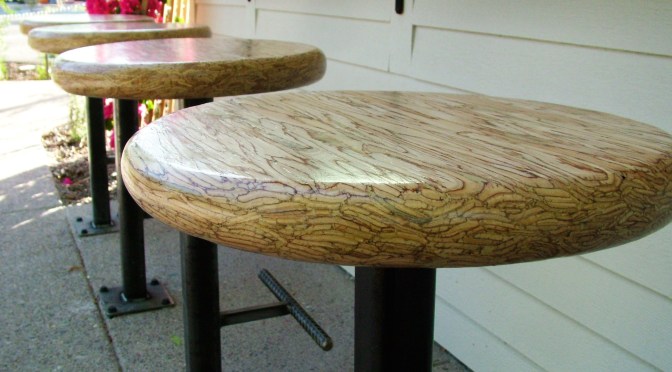
I created a set of 27 bolt-down stools for The Orchard in Phoenix – short ones for outdoors and inside at low counters, and tall ones for use at a bar-height counter. The tops are made of Parallam – an engineered structural wood product by Weyerhaeuser which is typically used for long-span beams. Parallam is made from the waste strands of wood from the mill, and is a very strong product. It is not without its challenges, though. It takes a lot of work to get it suitable for furniture or other “presentable” applications. Like polishing a gem, eventually the beauty emerges. I had seen some amazing turnings that wood artists had made from Parallam, such as bowls – I knew its potential, but it’s not a quick process.
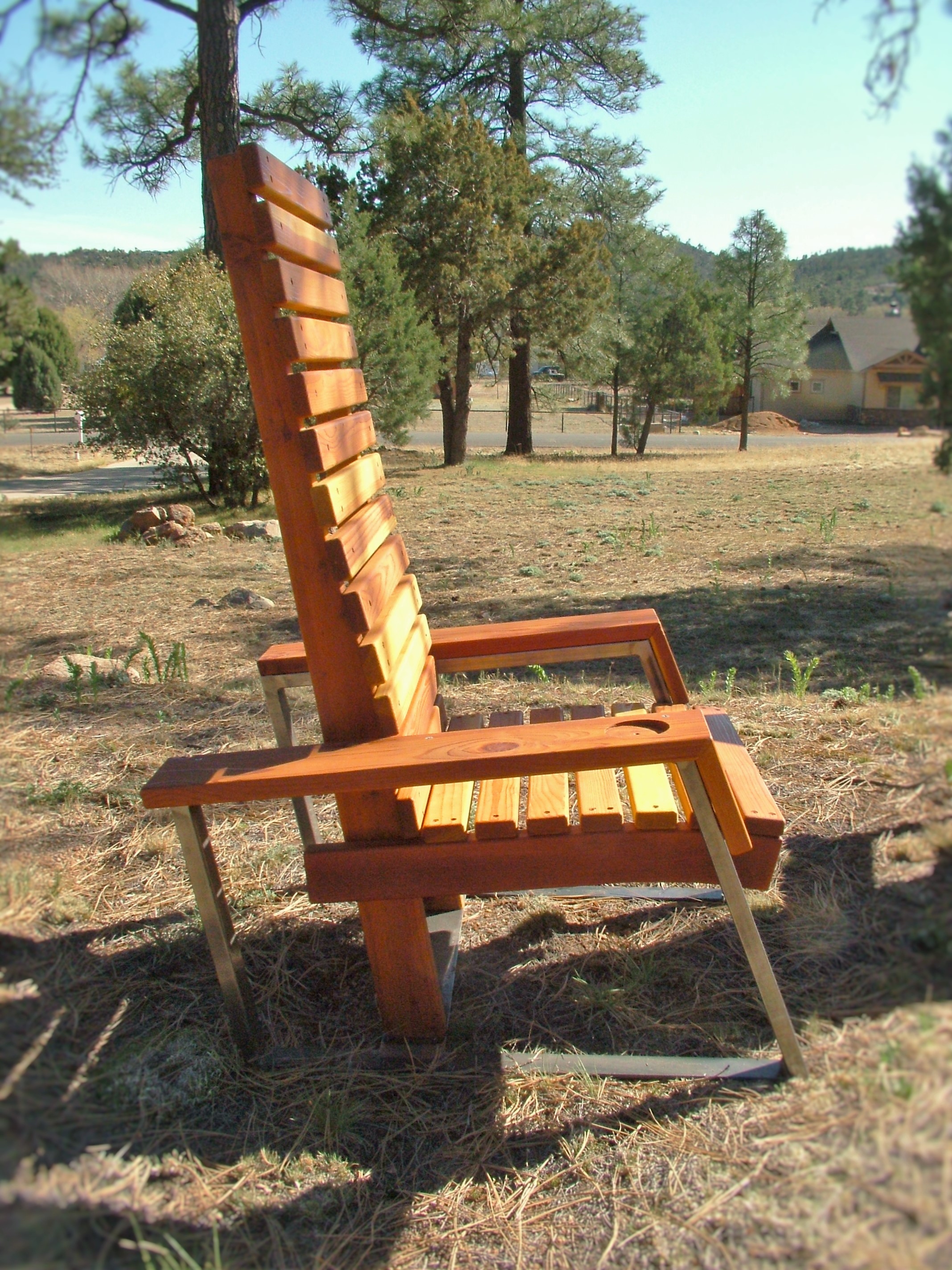
When asked to design and produce outdoor chairs such as the classic Adirondack Chair, I decided to go in a bit different direction. Adirondacks (named for the mountains in New York) I have always thought were too low, too far reclined, and having obnoxiously ground-parallel arms. Plus, anyone can get a set of plans to produce this long-running design – not a unique look.
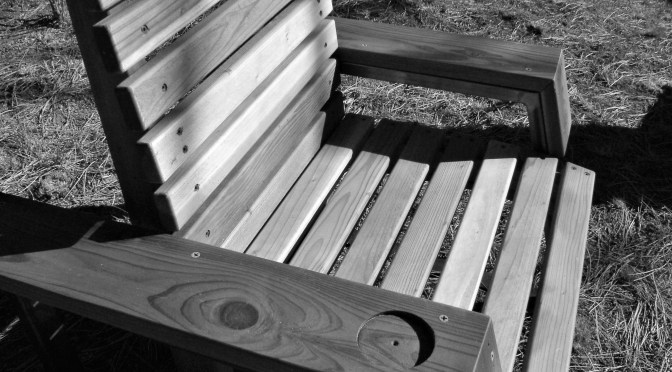
The right inclined armrest has a place to set a drink securely.
Since these chairs are for Phoenix, the Superstition Chairs take the name of the local mountains. In a modern fusion of steel and wood, these chairs borrow from the language of the Adirondack chair but sit more upright and with a higher seat – making it easy to get in and out of. I built this set of ten for The Orchard project.
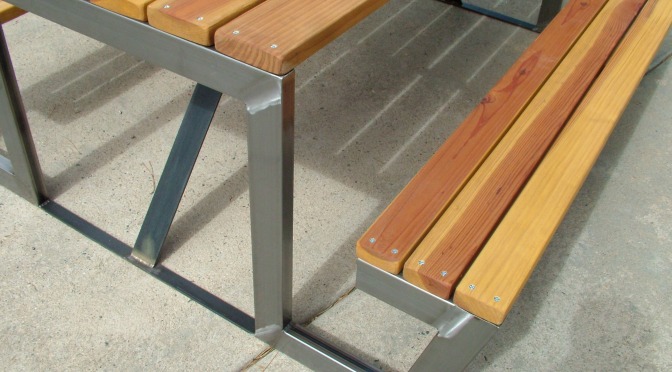
This modern, minimalistic picnic table is a marriage of oiled redwood and welded steel. Table is 72″ long. A pair of these tables were designed and constructed for The Orchard project in Phoenix.
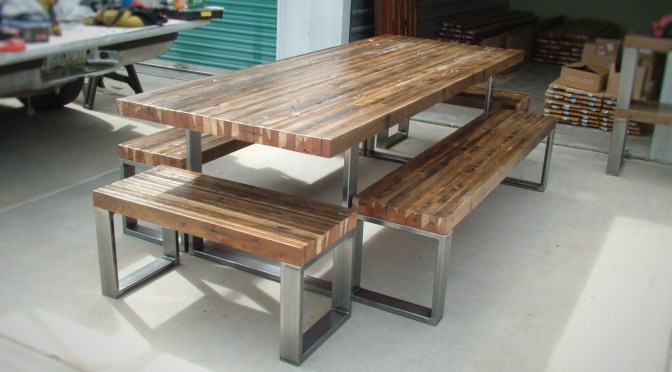
I made two sets of this original design for a table and benches, for The Orchard project in Phoenix. They are composed of reclaimed redwood deck boards. The tabletop is 36 x 96″, with two 72″ benches and two 36″ benches.
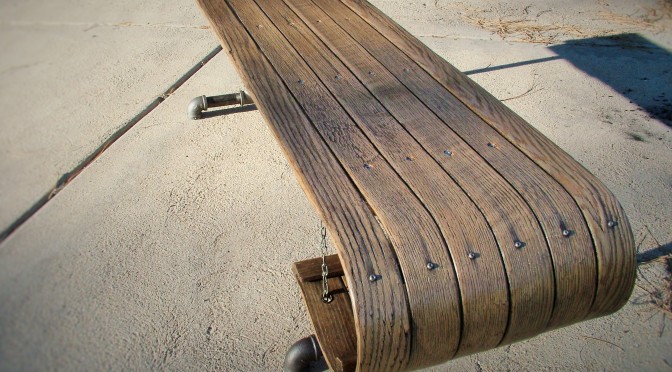
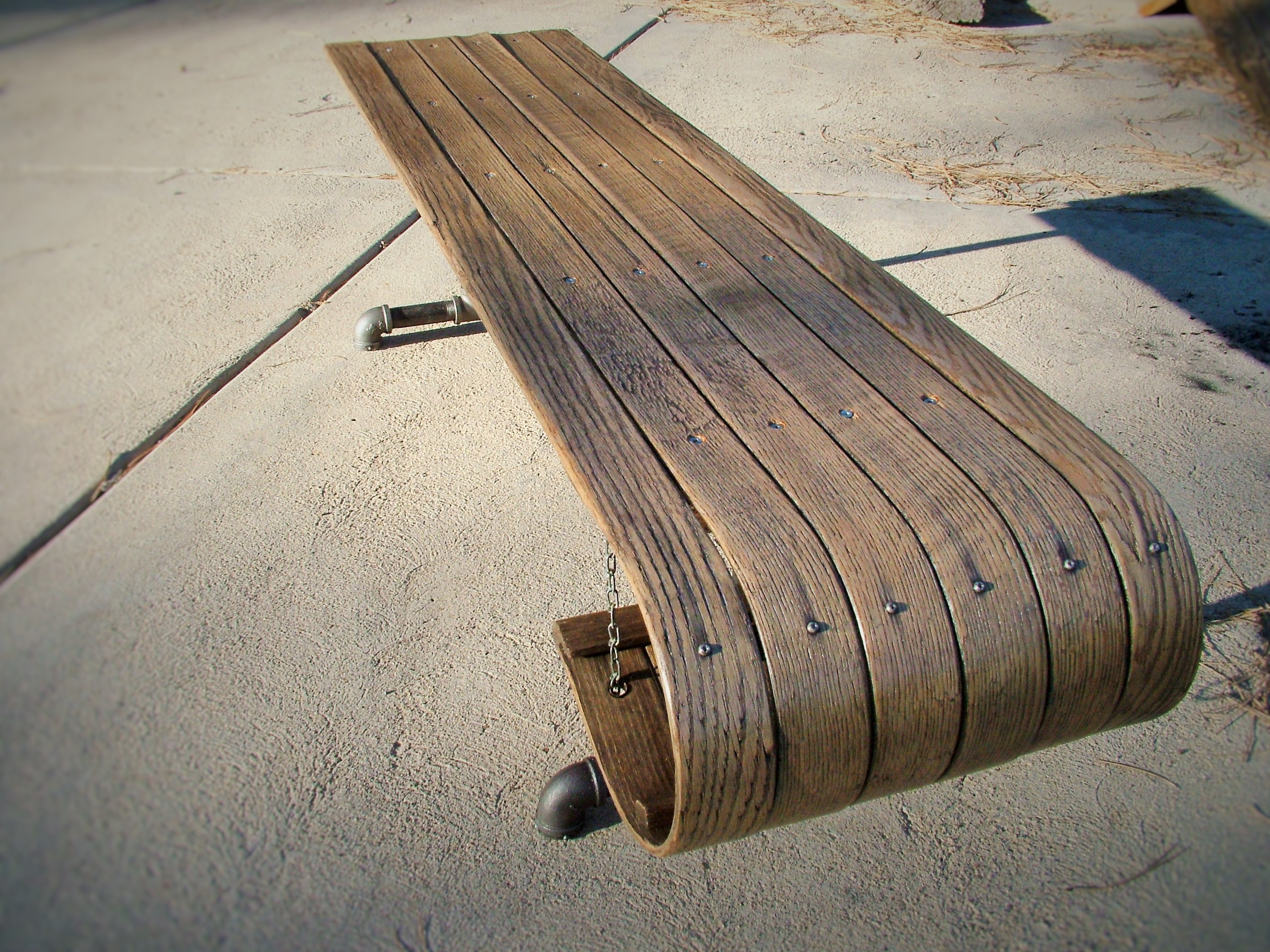
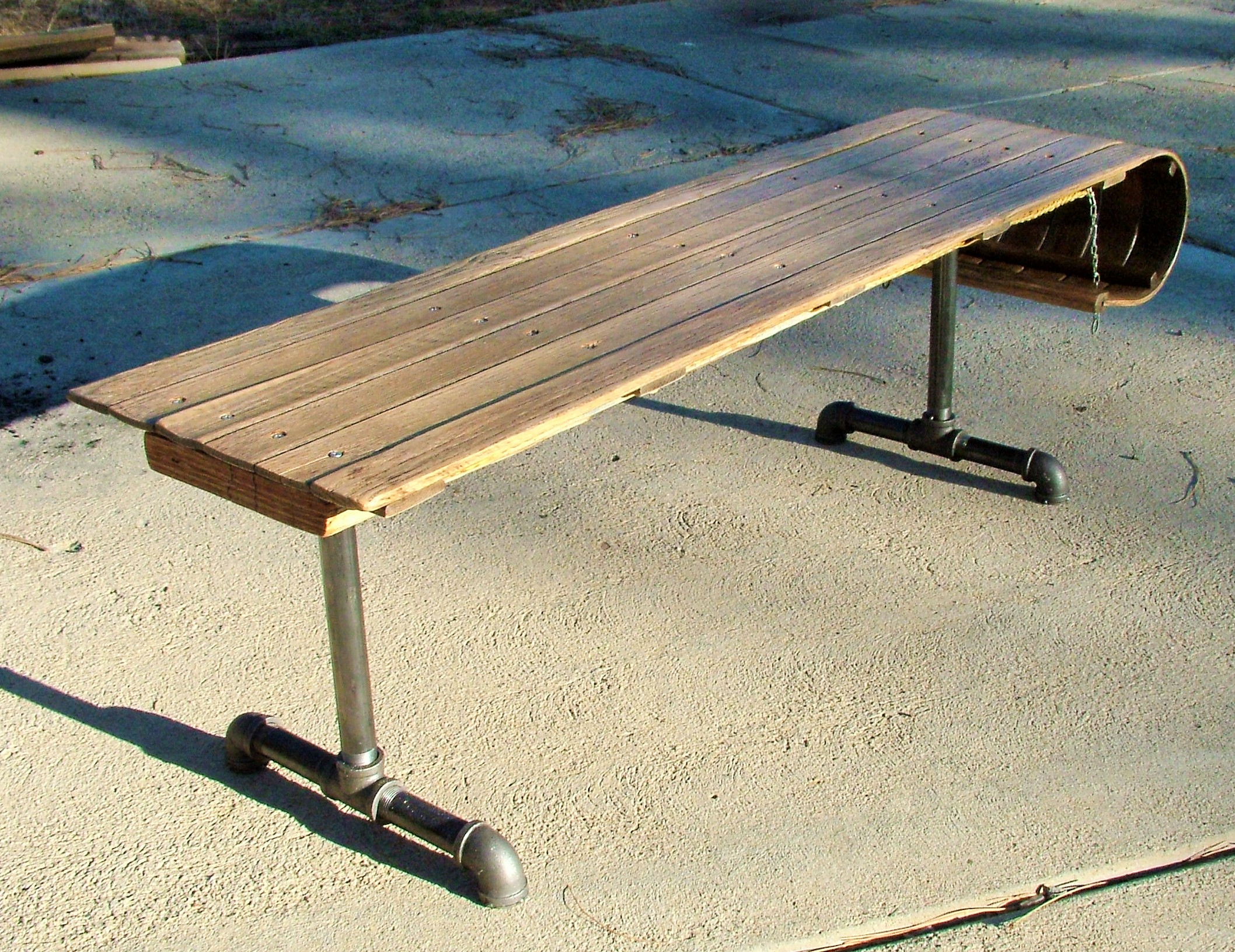
I found this toboggan in rough shape at our local Habitat for Humanity ReStore several years ago. I had consequently stored it away both in and out of doors, taking up storage space between two moves and filed away on the mental heap of good intentions.
I found it again a couple nights ago, which was good timing, because it seems fall in Prescott got short shrift (despite some long-lasting and glorious foliage for once) and we are off to the races for winter. Cold temps and snows are upon us.
I hope whoever purchases this bench (or long coffee table, if you prefer) will be able to enjoy this winter artifact all year round. Stout black iron pipe legs make the sitting height very comfortable.
To get the necessary rigidity for the bench, a piece of reclaimed scaffolding plank was added to the underside of the sled. This piece is for sale now at Revised, in downtown Prescott.






















 anastasis